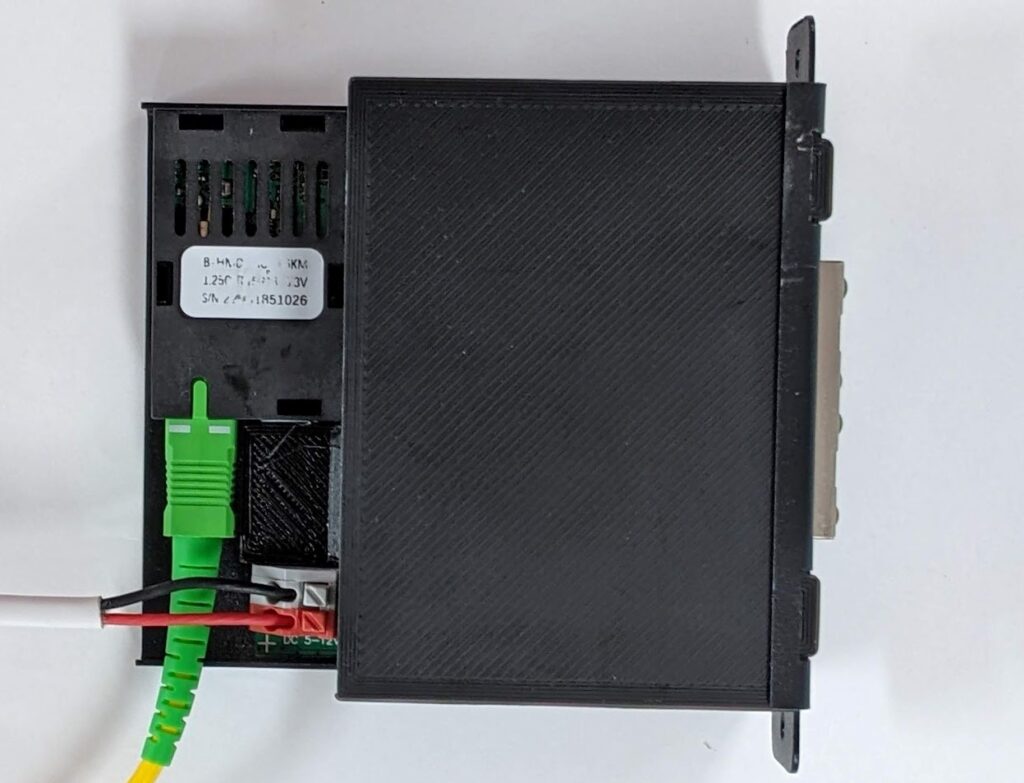

One of the design considerations we were looking at early on is how do we make this topology easy to install, easy to terminate, and easy to support? We knew from testing that traditional SFP ports, modules, and LC connectors were just too sensitive for infrastructure installs. We also didn’t like the burden that an SFP module install, testing, etc. would put on technicians. We wanted to give the most robust, best install possible, while delivering the best value to the integrator and client. Too much to ask? We didn’t think so.
So we redesigned from the ground up how we could distribute TCP/IP content via fiber. The first step was to get down to one strand of fiber for both send and receive. We settled on a proven technology called WDM, Wavelength Division Multiplexing. There is a link at the bottom if you want to learn more about this standard, or need something to help you sleep tonight. Basically it just means that we send at one light frequency and receive at another, allowing two way traffic over a single strand.
The next hurdle requiring attention was the connection of the transceivers to the fiber. By using WDM we could eliminate the SFP module, so now we looked at the connector. We wanted one that was low cost, durable, and easy to handle, even with gloves on. We selected the SC connector for this task because it rated the best in our connector shootout (yes, we actually did weighted averages of six different connectors before selecting SC). The larger size, simple press/pull locking connector, and broad availability makes it perfect for this application.
So there you go, now you know how (and why) our topology is the wait it is. Stay tuned for our next post about the system architecture!